What does your work as a deckhand aboard the Amundsen involve?
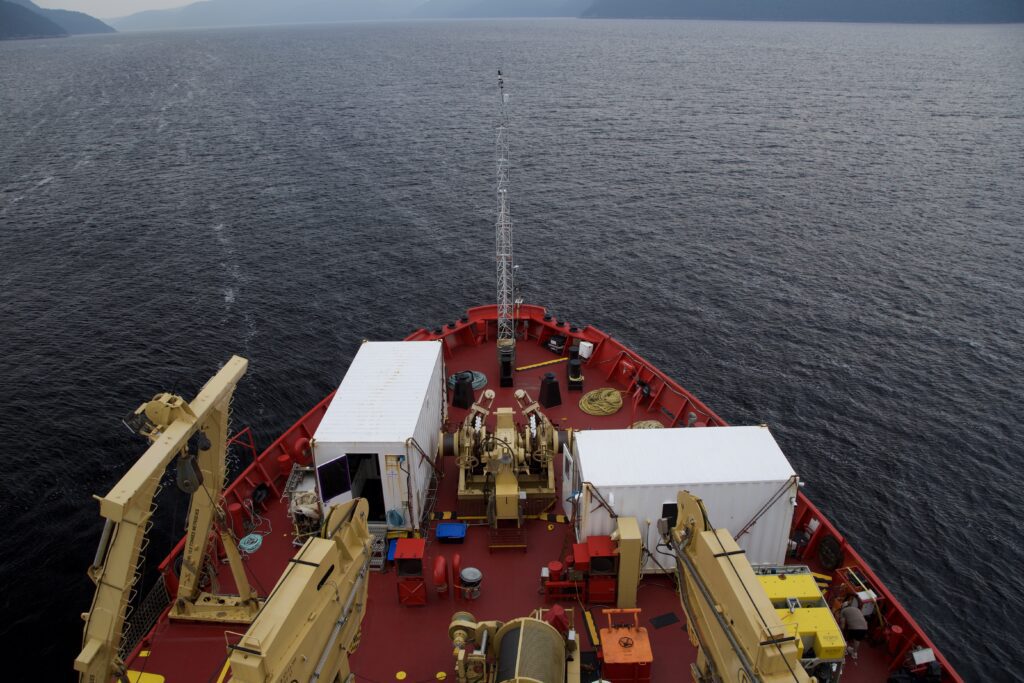
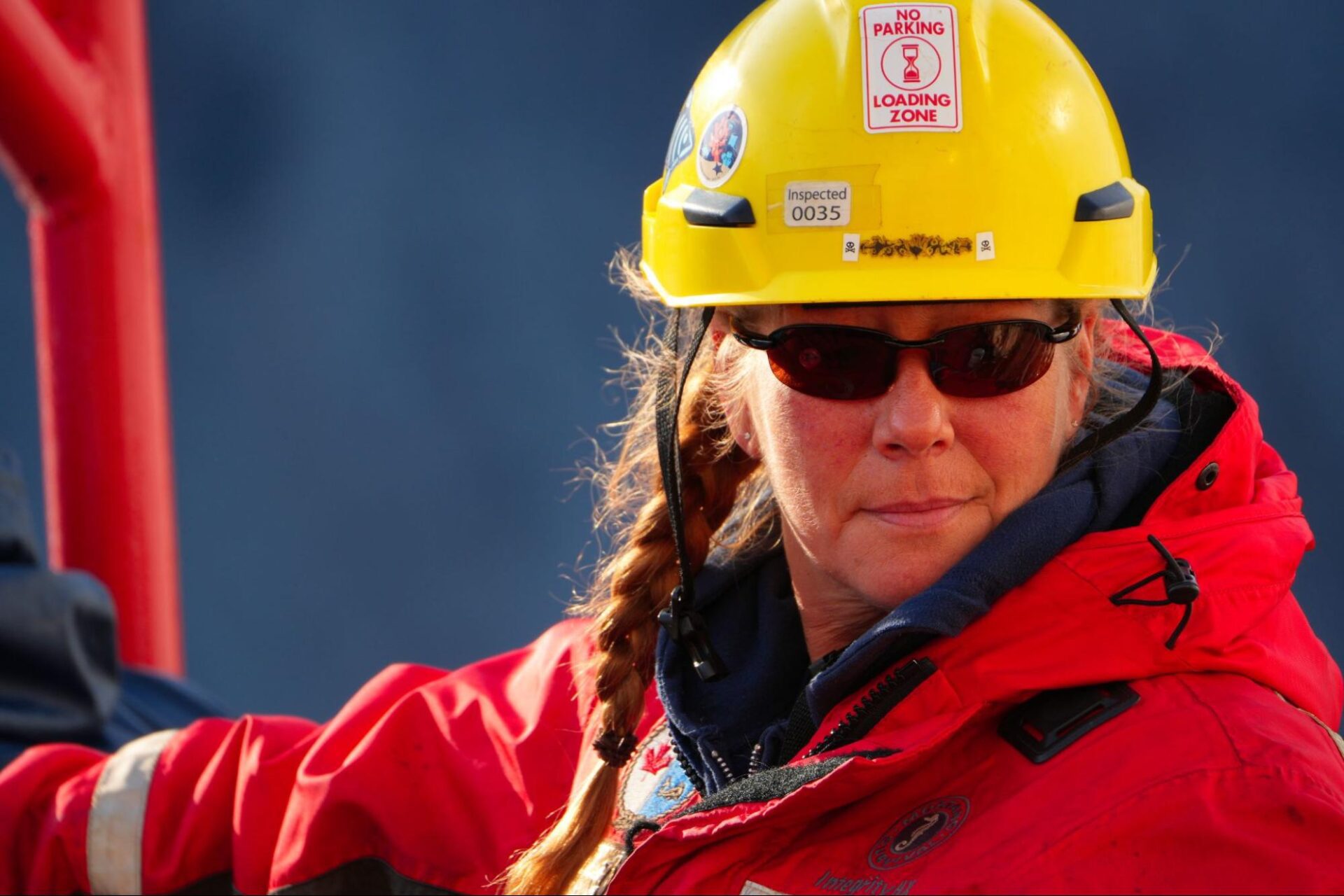
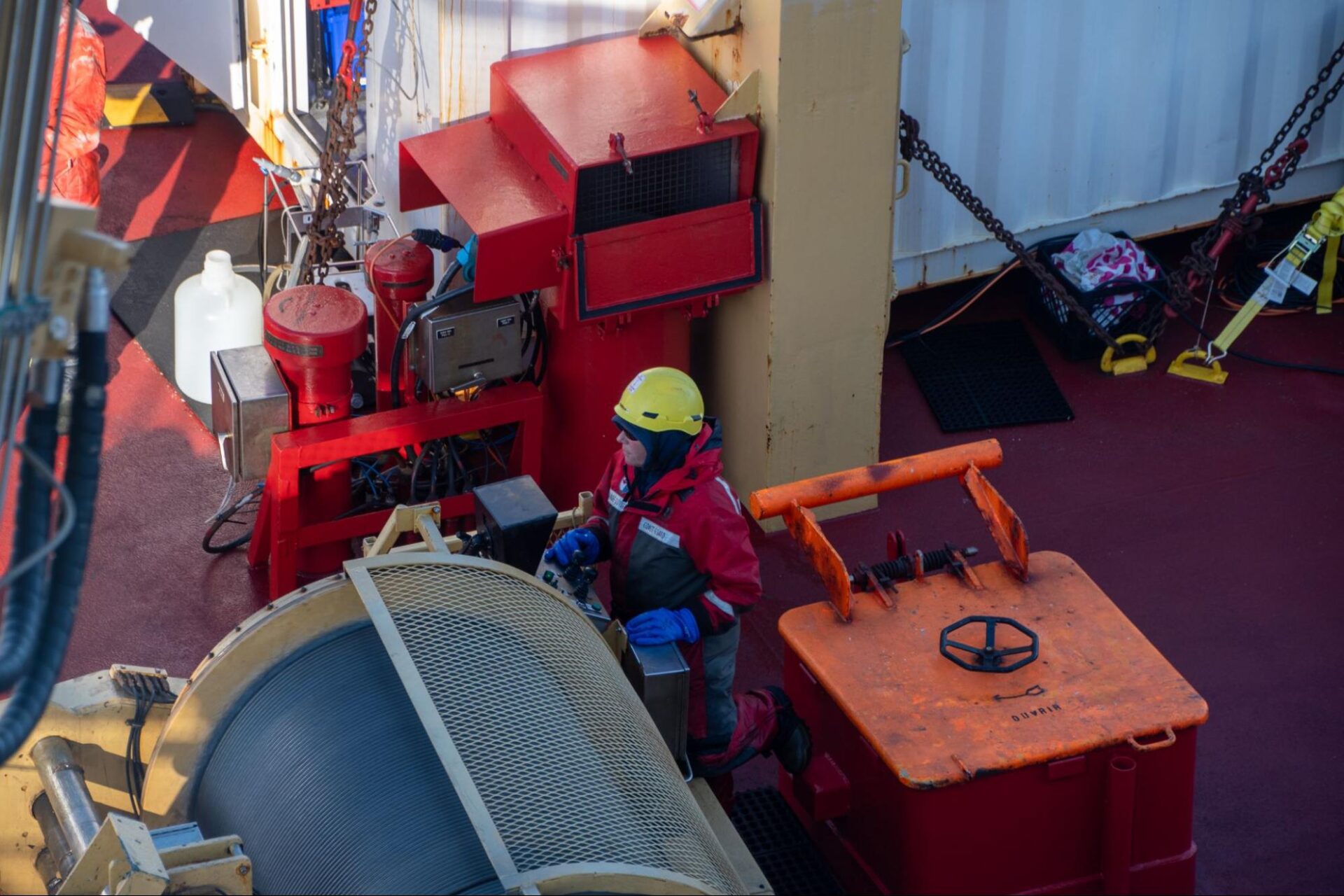
My work mainly involves loading equipment onto the ship, ensuring the safety of the scientists, and accompanying the teams during sampling operations. Sometimes, I also provide moral support to people who have never been aboard before. I reassure them and teach them how to use their equipment safely. My duties are quite varied.
When we’re not in science mode, I take care of the ship’s maintenance. I do repairs, painting, cleaning, and cargo loading.
How long have you been in this position?
I first came aboard the Amundsen in 2003–2004 as part of the CASES project. I had the opportunity to be part of the crew during the International Polar Year. It was a really interesting experience because we were surrounded by sea ice throughout the winter.
It was like a camp on the ice: we travelled by snowmobile, set up tents, and helped the scientists with their operations on the ice, including drilling and maintaining holes in the ice.
I came back in 2007–2008 for another winter leg because I already had experience working in winter conditions. I also worked on other vessels when needed, which allowed me to discover different tasks and gain experience aboard other ships. I officially returned to the Amundsen in 2013 as a permanent member of the crew.

Have you done this kind of work on other vessels? If so, what makes the Amundsen different?
I worked on navigation buoy operations aboard the Martha Black and the George Harper. I also travelled to the North aboard the Desgroseillers and the Radisson, but these vessels are very different from the Amundsen. The experience on board is not the same, and we don’t work with scientists in quite the same way.
The Amundsen is really close to my heart. It’s a vessel full of challenges. I love it!
What does a typical day look like for you when the ship is at sea?
My days start at 5:30 a.m. and end at 5:30 p.m. I’m constantly carrying out sampling operations with the scientific teams—one operation after another.
When the ship is in transit from one station to another, we take the opportunity to do tasks that we can’t get to during operation days, such as repairing some of the ship’s equipment or doing maintenance and cleaning.
As a deckhand, I also operate the ship’s cranes and winches. The challenge is even greater at sea because of the movement of the vessel. You have to stay alert and be ready for anything. I really enjoy this part of the job. It’s demanding, but you’re never bored.
What are the biggest challenges you face in your work?
At first, there was a lot to learn. I had to learn how to handle the different instruments and understand all the details involved in the various operations. Now, I’m able to support new crew members and pass on all that knowledge.
I’m really motivated by all the operations that take place on the ship. It’s dynamic and not routine at all. The days are long and busy, but they go by quickly.
Is there a particularly intense time of year for you? Why?
Mobilization is a fairly intense period for the deckhands. Several scientific teams come aboard, each with different needs. There’s a huge amount of equipment to load onto the ship, along with containers, supplies, and food that all need to be stored.
It’s also a time when you have to find solutions—and I really enjoy that!
What do you enjoy most about your work?
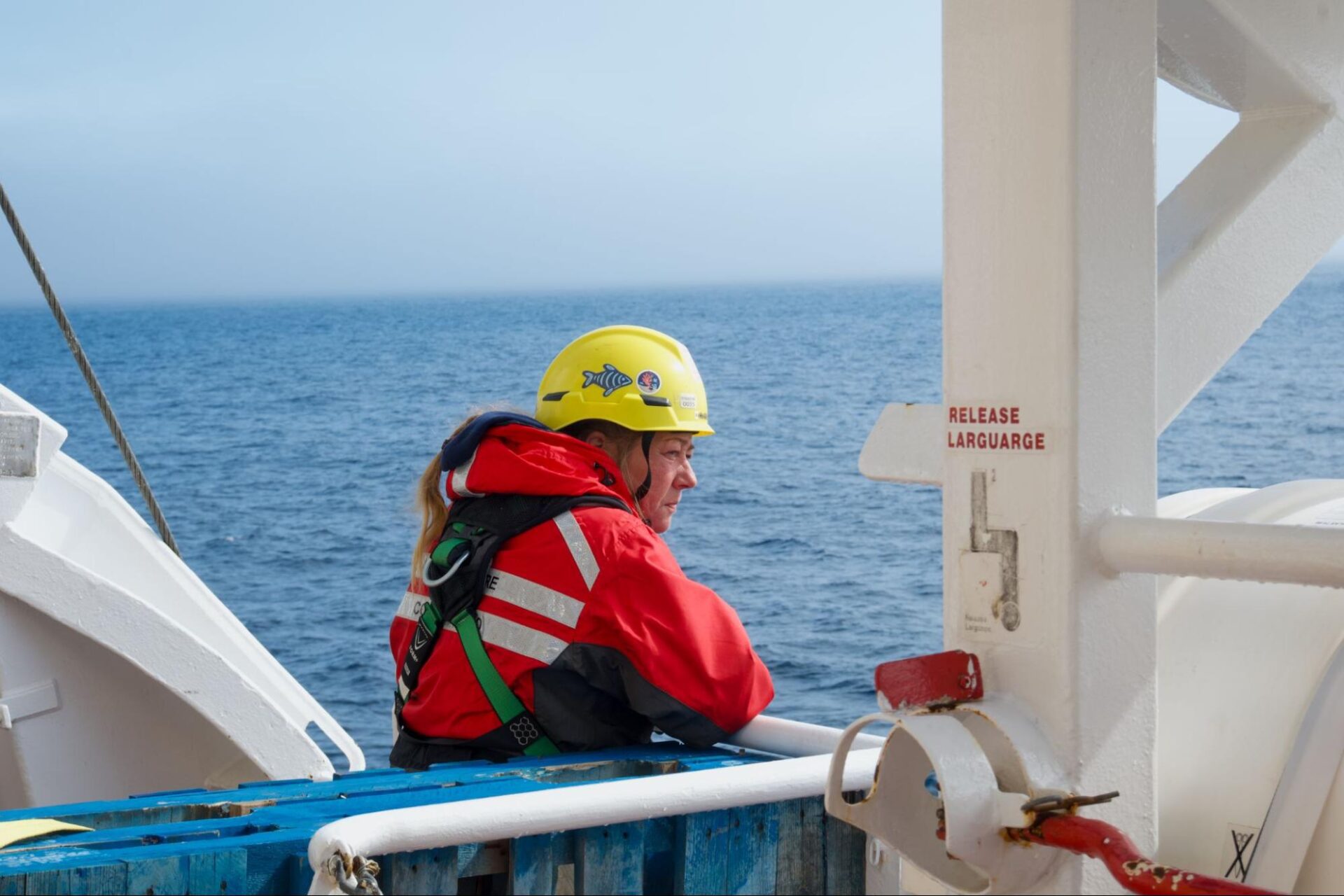
Being a deckhand means knowing how to make do and, sometimes, invent things. This morning, for example, I was actually making a scoop so that I could clean the water well in the ship’s hull.
You have to be creative and able to imagine objects or tools that can help carry out scientific operations and meet the teams’ needs. We’re in the North, so you have to know how to work with what you have on hand.
What qualities or skills are essential for a deckhand?
Team spirit, helping one another, and sharing knowledge. You have to be willing to listen when people need help, whatever that need may be. You also need to be able to anticipate things and pay attention to what’s happening around you.
We’re isolated, and sometimes people can feel lonely on the ship. I therefore think it’s very important to be there for others and support them during their time at sea.
I’m one of the longest-serving and most experienced people on board. People come to me when they have concerns or questions. I like being able to be there for them and reassure them.
What advice would you give someone who would like to pursue a similar career?
Being a deckhand is the best job in the world. You have to enjoy change, be able to adapt, and appreciate the present moment. In every little moment, there’s a moment of happiness, even when things are difficult.
If you’re resourceful, independent, creative, and enjoy finding solutions, this is the job for you.