The Arctic Ocean is characterized by a strong vertical stratification of its waters. Due to the environmental gradients that shape the region and its relative isolation from other oceans over thousands of years, distinct water masses persist within Arctic basins. Unlike some ocean regions where temperature plays a major role in controlling stratification, Arctic Ocean stratification is primarily driven by variations in salinity. Cold, low-salinity waters occupy the surface, while warmer, saltier waters are found at greater depths. This structure creates a succession of water masses with distinct origins: Arctic surface waters, Pacific-origin waters, waters from the Canadian Arctic, and Atlantic waters occupying the deepest layers.
Associated with these different water masses, microbial communities contribute significantly to marine biodiversity and biogeochemical cycles, particularly the carbon cycle. The physical and chemical characteristics of each water mass are thought to play an important role in shaping the distribution and composition of these microbial communities. However, their distribution, functional diversity, and the factors that structure these communities remain poorly understood, especially in the Arctic Ocean.
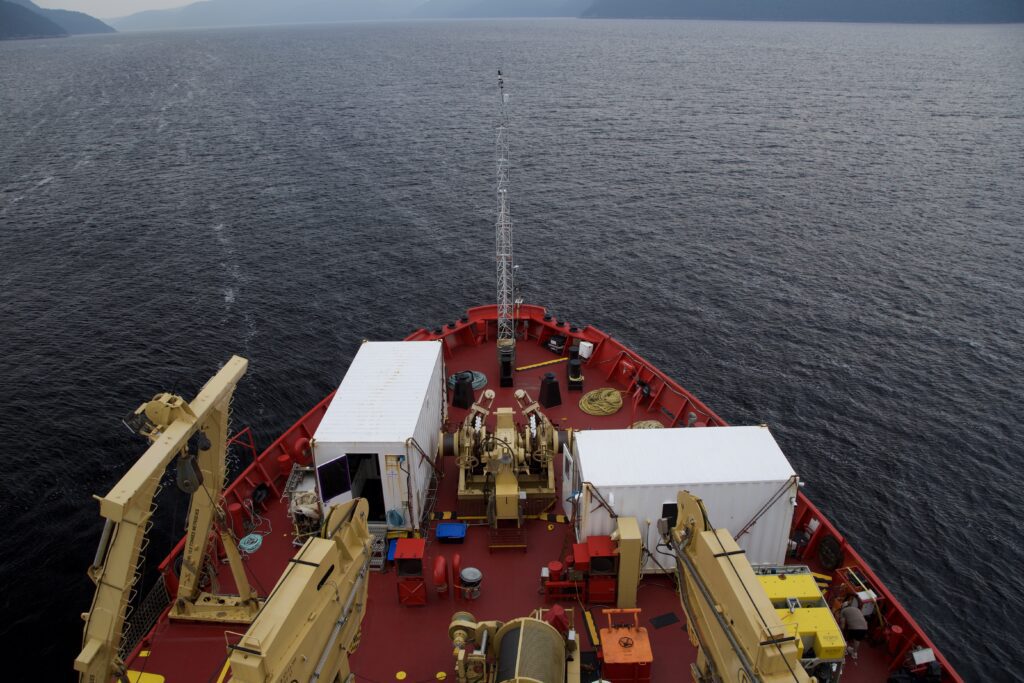
This study investigates the hypothesis that the dominant trophic strategies of microbial eukaryotes are associated with their water mass of origin. To characterize the composition and diversity of microbial communities found in different Arctic water masses, water samples were collected using the CTD-rosette aboard the Canadian research icebreaker CCGS Amundsen during summer 2019. They then sequenced the 18S ribosomal RNA gene from two size fractions of microbial plankton, allowing them to identify major taxonomic groups and their potential trophic strategies.
The four water masses studied were primarily dominated by dinoflagellates and heterotrophic organisms, which obtain energy by consuming organic matter already present in the environment. Organisms capable of producing their own energy through light (phototrophs), or of combining light-based energy production with the use of organic matter (mixotrophs), were mainly associated with surface waters where light is available. However, the presence of some phototrophic lineages in deeper waters suggests that these organisms may be transported from surface layers or originate from the resuspension of material from sediments.
These results also reveal the possible presence of a reservoir of microbial diversity in deep Atlantic waters, including certain dinoflagellates and Syndiniales, a group of microscopic parasites that play important roles in marine ecosystems. This study contributes to a better understanding of how water mass origin shapes the diversity and ecological functions of microbial eukaryotic plankton in the Arctic Ocean.
Labarre A, Harðardóttir S and Lovejoy C (2026) Taxonomy as an indicator of trophic diversity in microbial eukaryotic plankton in an Arctic outflow gateway. Front. Ecol. Evol. 14:1800428. doi: 10.3389/fevo.2026.1800428